The Complete Homeowner’s Guide to Clogged Drains: Causes, Fixes & When to Call a Plumber
Slow sinks, standing shower water, or drains that keep backing up aren’t just annoyances—they’re early warning signs. This guide walks you through why drains clog, safe ways to clear them, how to prevent future blockages, and the red flags that mean it’s time to call a licensed plumber.
Always treat sewage backups, foul odors, or water near electrical as urgent safety issues.
Quick Summary
On this page
Before you start
Most drain clogs are low-risk, but anything involving sewage, foul odors, or water near electricity is a safety issue. Work slowly, protect your eyes and hands, and stop if you’re unsure.
If you see any of these signs, stop troubleshooting and call a licensed plumber instead:
STEP 1 Signs of a clogged drain
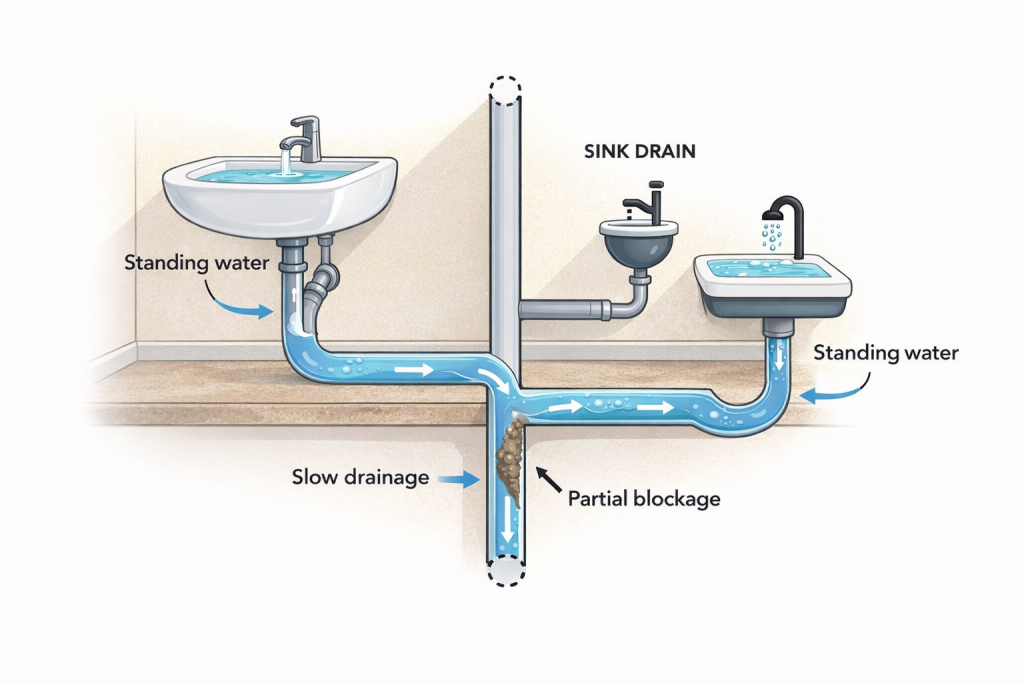
Clogged drains rarely go from “perfectly fine” to “completely blocked” overnight. Most of the time, buildup starts weeks or months before the first backup. If you know what to watch for, you can often fix a problem early—before it turns into an overflow or sewage spill.
Common symptoms of a developing clog
STEP 2 Quick safety checks before you touch anything
Before you plunge, snake, or remove any pipes, take a minute to make the work area safe. A few simple checks can prevent messy overflows and help you decide whether this is truly a DIY job.
- Check for sewage or multi-fixture backups. If more than one fixture is backing up—or you see sewage in a tub, shower, or floor drain—treat it as a main sewer problem and call a plumber.
- Look for water near electricity. If standing water is close to outlets, cords, or appliances, keep people and pets away and avoid DIY. Water and electricity are a dangerous mix.
- Locate your main water shutoff. Know where your main valve is in case a pipe or fitting loosens while you’re working.
- Clear and protect the work area. Remove rugs and items under the sink, lay down old towels, put on gloves, and have a bucket ready if you’ll be opening the P-trap.
💡Tip
When one drain is slow, you usually have a local clog. When multiple fixtures back up at once—especially on lower levels—it often points to a main sewer line problem.
STEP 3 How to unclog a drain safely (step-by-step)
These steps go from simplest and lowest risk to more involved. You don’t have to use every step—stop when the drain flows normally or when you reach something you’re not comfortable doing.
- Try very hot or boiling water (kitchen sinks only).
For grease-based kitchen clogs, carefully pour a pot of very hot or boiling water directly into the drain in stages, allowing 15–20 seconds between pours. Finish by running hot tap water.
Skip this step for toilets, questionable plastic piping, or very old drains where heat could stress the pipes. - Use a plunger to move simple blockages.
For sinks and tubs, use a flat-bottomed plunger (not a toilet flange plunger). Cover any overflow openings with a wet cloth, run enough water to cover the plunger cup, then plunge in short, strong strokes for 20–30 seconds.
If water suddenly whooshes away and stays down, you likely cleared the clog. If nothing changes after a few rounds, move on. - Pull out hair and gunk with a plastic drain stick (bathrooms).
Remove the drain cover if needed. Insert the plastic stick, twist gently, and pull it back out. Expect a messy clump of hair, soap scum, and residue. Repeat until you’re bringing up only small amounts of debris. - Clean the P-trap under the sink.
Place a bucket under the P-shaped pipe under the sink. Loosen the slip nuts, remove the trap, and clean out any sludge or solid debris. Rinse the trap, reassemble it with the washers seated correctly, and run water while checking carefully for leaks. - Use a manual drain snake for deeper clogs.
Feed the cable into the drain while slowly turning the handle. When you feel resistance, tighten the set screw and rotate to break up or grab the clog. Pull the cable back out, wipe off debris, and then flush the line with hot water.
Stop here and call a pro if:
Avoid common mistakes: Skip chemical drain cleaners—they can corrode pipes, create toxic fumes, and make future professional work harder. Avoid coat hangers or sharp metal tools in drains, and leave electric or heavy-duty snakes to licensed plumbers.
STEP 4 When to call a plumber for a clogged drain
Some clogs are just the visible symptom of a bigger problem—like a failing main sewer line, tree roots, or sagging underground piping. Knowing when to stop DIY and call a pro helps you avoid sewage damage and repeated frustration.
Clear signs you need a plumber
What to tell the plumber when you call:
This information helps the plumber decide whether to send a basic drain-cleaning setup or camera and jetting equipment for deeper issues.
STEP 5 How to prevent future clogged drains
Once you’ve cleared a clog, prevention is your best friend. A few simple habits in the kitchen, bathroom, and yard can dramatically reduce how often you deal with slow drains and backups.
Kitchen habits that keep drains clear
Bathroom & toilet prevention
Whole-home drain care
💡Pro Tip