Roto-Rooter Pipe Shield®: What It Is, How It Works, and Why Homeowners Use It
If you deal with recurring slow drains from hair, grease, soap residue, or detergents, Pipe Shield is a simple monthly maintenance treatment designed to help prevent buildup from sticking inside your pipes. This guide explains what it does, how it works, how to use it, what it can (and can’t) fix, and when it makes sense for your home.
Pipe Shield is a maintenance product—do not use it as a substitute for professional help when you have active backups, sewage odors, or multiple fixtures draining poorly.
Quick Summary
On this page
Before you start
Pipe Shield is designed for routine drain maintenance, not emergencies. If you have a fully blocked drain, sewage smell, or multiple fixtures draining slowly, address that problem first (snaking/plunging or a professional inspection) before starting maintenance treatments.
If you see any of these signs, stop and call a licensed plumber instead:
STEP 1 What is Roto-Rooter Pipe Shield®?
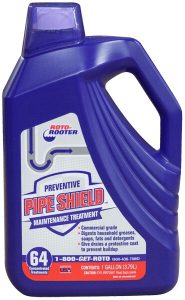
Pipe Shield is a preventive drain-maintenance liquid formulated to help protect your pipes from organic buildup—things like fats, grease, cooking oils, soap residue, detergents, hair-binding gunk, and food particles. These materials naturally stick to pipe walls over time and slowly narrow the pathway water flows through. Pipe Shield is “monthly pipe care,” not emergency clog removal.
What it helps protect against
STEP 2 How Pipe Shield works (and what it won’t do)
Pipe Shield uses gentle, biodegradable ingredients to help create a light protective coating inside your drains. That coating helps reduce how easily grease and soap scum stick to pipe walls, and it can help loosen existing organic residue over time. It’s designed to be safe for common household piping and septic systems. Importantly: it does not clear heavy clogs—snaking, plunging, or professional cleaning is still required for major blockages.
- Helps prevent buildup from sticking. Less grease/soap film sticking means fewer slow drains over time.
- Helps break down organic residue gradually. It works over repeated applications, not instantly.
- Keeps drains flowing more smoothly. Most noticeable in kitchens, bathrooms, laundry rooms, and utility sinks.
- Designed to be pipe- and septic-friendly. It’s not meant to create heat, fumes, or corrosion like harsh cleaners.
💡Tip
Pipe Shield is best used as a routine — the results come from consistent use, not one-time treatment.
STEP 3 Where Pipe Shield works best
Pipe Shield is especially effective in places that commonly develop organic buildup—kitchens, bathrooms, laundry rooms, utility sinks, and even septic homes where gentle maintenance is preferred.
- Kitchen drains.
Helps reduce grease buildup, food residue, and soap scum—common causes of slow kitchen sinks. - Bathroom sinks, tubs, and showers.
Helps limit hair and soap accumulation along pipe walls. - Laundry drains.
Useful for reducing detergent film and lint residue that can contribute to slow drains. - Basement and utility sinks.
Helpful for mixed-use drains that occasionally see dirty water, sludge, or debris. - Septic systems.
Pipe Shield is septic-safe and can support smoother drain flow in septic homes.
Stop here and call a pro if:
Avoid common mistakes: Don’t mix Pipe Shield with other drain cleaners. Use it when drains won’t be used for several hours (overnight is best). Remember: Pipe Shield is maintenance, not an emergency drain opener.
STEP 4 How to use Pipe Shield (homeowner instructions)
Using Pipe Shield is simple and works best as a routine. Apply it at night so it can sit undisturbed and coat the pipe walls. Follow label directions, and don’t combine it with other drain products.
Monthly maintenance routine
If one drain is “problematic”
If the drain is still slow after consistent use, the issue may be physical blockage, venting, or a deeper line problem that needs inspection.
STEP 5 Safety, benefits, and when Pipe Shield won’t help
Pipe Shield is designed as a safe, non-corrosive, biodegradable maintenance product. It can be a great fit for homes with recurring slow drains and organic buildup, but it isn’t a solution for structural sewer problems or major blockages. Use it as part of a prevention routine—alongside good drain habits.
💡Pro Tip