The Master Guide To Why Breakers Trip: A Complete Homeowner Diagnostic Guide
Circuit breakers are the most important safety devices in your home’s electrical system. When a breaker trips, it is doing exactly what it was designed to do—stop unsafe electrical conditions before they become fire hazards or damage wiring, appliances, or the breaker panel itself. Breakers do not trip at random. A tripped breaker is a precise, intentional reaction to excessive current, wiring faults, appliance failures, or abnormal electrical behavior.
This guide provides a structured, technical, and highly readable explanation of how circuit breakers work, the difference between overloads, shorts, ground faults, and arc faults, why breakers trip, why trip patterns matter, what homeowners can safely check, what requires licensed electrician evaluation, how high-demand circuits behave under stress, long-term solutions that prevent repeated tripping, and when panel or wiring upgrades are recommended. The structure mirrors the Air Conditioning Master Guide: firmly organized, diagnostic-forward, and built for fast homeowner comprehension.
Always exercise caution when inspecting electrical systems. Consult a licensed electrician for complex issues or repairs.
Quick Summary
On this page
Before you start
Electrical work can create shock and fire hazards. Turn off power at the breaker and verify the circuit is de-energized before touching any wiring or devices.
If you see scorching, smell burning, hear buzzing/crackling, or the breaker won’t reset, stop and call a licensed electrician.
SECTION 1 — HOW BREAKERS WORK: A CLEAR SYSTEM OVERVIEW
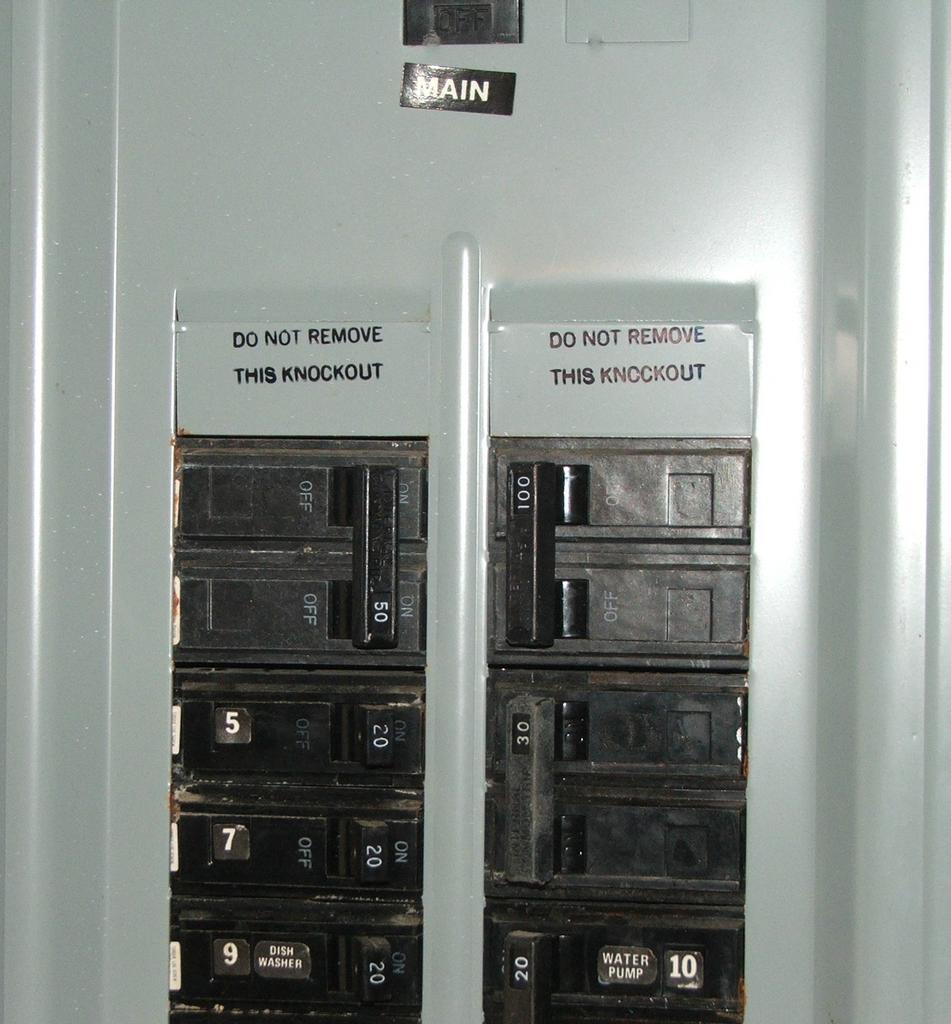
A circuit breaker monitors the flow of electricity through a specific electrical branch. If current rises above safe levels—or if a dangerous fault occurs—the breaker disconnects the circuit automatically. Every residential breaker contains two protection mechanisms.
1.1 Thermal Protection (Overload Response)
The internal bimetallic strip bends as it heats. If too much current flows for too long, the strip bends far enough to release a latch, and the breaker trips. This protects against too many appliances on one circuit, long-duration current above the circuit rating, undersized wiring subjected to excess load, and heat buildup inside the breaker or receptacle. A thermal trip is typically delayed. The circuit may run for minutes before tripping.
1.2 Magnetic Protection (Instant Fault Response)
A magnetic sensor inside the breaker reacts instantly to massive current spikes. This protects against short circuits, severe ground faults, and high-energy fault arcs. Magnetic trips are typically instantaneous—no delay at all.
1.3 Breakers Don’t “Wear Out” Without Cause
Breakers can weaken from heat damage, mechanical wear, or panel issues, but they do not spontaneously lose function. If a breaker trips repeatedly, there is always a specific cause—load-related, wiring-related, appliance-related, environment-related, or panel-related. Understanding which category applies is the foundation of proper diagnosis.
SECTION 2 — WHY BREAKERS TRIP: THE FOUR CRITICAL CATEGORIES
Every breaker trip falls into one of four technical classifications: overload, short circuit, ground fault, or arc fault. Recognizing which category applies helps determine whether the issue is a simple overload or a more serious electrical fault.
2.1 Overload
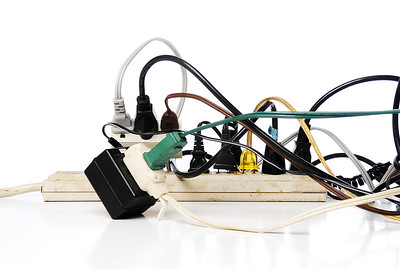
The circuit is being asked to deliver more current than it is rated for. Common examples include running a space heater and hair dryer on the same 15A circuit, microwave and toaster on a shared kitchen circuit, or vacuum and space heater in a bedroom. Overload trips usually occur after minutes of use as heat builds up inside the breaker and wiring. They are the most common and least dangerous type of trip but should not be ignored.
2.2 Short Circuit
A short circuit occurs when a hot conductor contacts neutral or another conductive surface directly, creating a very low resistance path. Short circuits cause extremely high current flow and trip the breaker instantly. They often originate from damaged wires, loose connections, pinched cables behind appliances, failing switches, or internal device failures. Shorts are dangerous and require immediate professional evaluation.
2.3 Ground Fault
A ground fault occurs when electricity flows from hot to ground unintentionally. Ground faults can be life-threatening because current may travel through conductive building materials or people. Breakers with built-in ground-fault detection, and especially GFCI devices, trip quickly when they detect unsafe current paths. Ground faults often involve moisture intrusion, deteriorated insulation, or appliance breakdown, and are common in kitchens, bathrooms, basements, exteriors, and garages.
2.4 Arc Fault
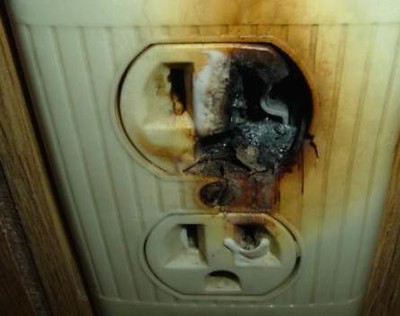
Arc faults result from loose connections, damaged cords, or degraded insulation that cause electricity to arc between conductors. These arcs generate intense heat and can ignite surrounding materials. AFCI breakers are designed to detect these patterns and disconnect power before fires develop. Arc faults are common in older wiring, areas where cords are frequently bent or pinched, or circuits with damaged conductors hidden inside walls or junction boxes.
SECTION 3 — THE DIAGNOSTIC VALUE OF TRIP PATTERNS
Breakers communicate through their timing and sensitivity. Pattern recognition is the fastest way to narrow down causes and decide whether a situation is likely load-related or fault-related.
3.1 Instant Trip When Turning On the Breaker
An instant trip usually signifies a short circuit or severe ground fault. This demands professional evaluation. The breaker is reacting to a massive current spike almost as soon as power is applied.
3.2 Trip After Several Minutes of Operation
A breaker that trips after the circuit has been running for minutes typically indicates an overload or overheating. The thermal mechanism is responding to sustained high current rather than an instantaneous fault.
3.3 Intermittent Trip
Intermittent trips suggest loose connections, marginal wiring, aging devices, appliance cycling loads, or moisture-related issues that come and go. These are among the hardest faults to diagnose but always point to a real underlying condition.
3.4 Trip Only During Storms or High Humidity
Trips correlated with rain, snow, or high humidity often indicate moisture entering outdoor receptacles, failed weatherproof covers, damp basements or crawlspaces, or water inside junction boxes. These events typically involve ground faults rather than pure overloads.
3.5 Trip Only When a Specific Appliance Runs
If a breaker only trips when a specific device is used, the appliance or tool is likely at fault. Internal shorts, failing motors, or damaged cords can cause overloads or fault currents that trip the breaker while other loads operate normally.
3.6 Breaker Trips With Nothing Plugged In
Tripping with seemingly no load indicates panel or wiring issues such as bus bar damage, loose neutrals, rodent-damaged wiring, hidden shorts in walls, or a failing breaker. This scenario requires immediate electrician involvement.
SECTION 4 — HOMEOWNER-SAFE DIAGNOSTIC STEPS
Homeowners can safely perform a limited set of diagnostic steps that do not involve opening electrical boxes or exposing live wiring. These checks help distinguish simple overloads from deeper electrical issues.
4.1 Reset the Breaker Correctly
A breaker must be reset fully OFF before being turned back ON. A partial or soft reset may not latch properly. Always push the handle firmly to OFF, then to ON.
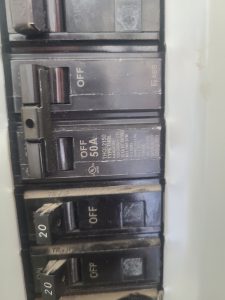
4.2 Identify What Was Operating When the Breaker Tripped
Determine which appliances or devices were running at the moment of tripping. High-wattage devices such as space heaters, microwaves, hair dryers, vacuums, and portable AC units are common overload sources, especially when used together on the same circuit.
4.3 Reduce Load and Re-Test
Unplug all devices on the affected circuit. Reset the breaker, then reintroduce devices one at a time. If the breaker trips after adding a specific device or combination, overload is likely. If it trips with minimal load, a wiring or device fault is more probable.
4.4 Inspect Visible Cords, Plugs, and Outlets
Check for frayed cords, cracked insulation, melted plugs, loose receptacles, burn marks, or sparks when plugging in. Any visible damage is a sign to stop testing and call a professional.
4.5 Check GFCIs on the Circuit
A tripped GFCI upstream may shut down downstream outlets and make it appear that the breaker failed. Reset GFCI outlets by pressing the RESET button until it clicks. If the GFCI or breaker immediately trips again, a ground fault is present somewhere on the circuit.
4.6 Check Moisture-Prone Areas
If the circuit serves basements, bathrooms, kitchens, garages, or exterior locations, consider moisture as a potential contributor. Visible water, condensation, or dampness near outlets or equipment means homeowners should stop and call an electrician rather than continue testing.
4.7 Observe for Odors, Heat, or Sounds
Electrical smells, unusually warm outlets or switches, buzzing, sizzling, or crackling sounds are red flags that may indicate arc faults or failing connections. These symptoms require immediate professional attention.
4.8 What NOT to Do
Homeowners must not remove outlet or switch covers, open junction boxes, replace breakers, work inside the electrical panel, or attempt to tighten wires. These actions create severe shock and fire risks and must be left to licensed electricians.
SECTION 5 — PROFESSIONAL DIAGNOSTIC PROCEDURES
Licensed electricians use structured diagnostic methods and specialized tools to identify the exact cause of breaker tripping. Their tests focus on actual current flow, wiring integrity, panel condition, and device health.
5.1 Circuit Load Analysis
Electricians measure current on the affected circuit using clamp meters or analyzers. They compare real load to circuit rating and determine whether repeated trips are caused by overload, undersized circuits, or inappropriate device combinations.
5.2 Short Circuit and Ground Fault Testing
Professionals perform continuity tests, insulation resistance tests, and ground fault tracing to find contact between conductors, conductive surfaces, or moisture paths. These tests locate hidden damage inside walls, conduits, or devices that a homeowner cannot safely see.
5.3 Panel Interior Evaluation
Technicians inspect the panel for loose lugs, corroded or overheated bus bars, double-tapped breakers, mismatched breaker types, and signs of arcing or heat damage. Panel issues often underlie seemingly random breaker trips.
5.4 Outlet and Junction Box Examination
Electricians open key outlets and junction boxes on the problem circuit to check for loose backstabbed connections, poor splices, brittle insulation, or overheating evidence. Many arc faults and intermittent trips originate in these hidden locations.
5.5 Appliance and Motor Testing
Appliances and HVAC equipment are tested for proper current draw, winding condition, and insulation integrity. Failing motors, compressors, or heating elements can intermittently trip breakers even when wiring is otherwise sound.
5.6 Infrared Thermography
Advanced diagnostics may include infrared cameras to identify hot spots on breakers, wiring, or connections that signal overload, poor contact, or impending failure. This non-invasive method is especially helpful for intermittent or load-related trips.
5.7 AFCI and GFCI Trip Code Interpretation
Modern AFCI and GFCI breakers often include diagnostic indicators or flashing codes that identify whether a trip was caused by an arc fault, ground fault, overcurrent, or internal self-test failure. Electricians interpret these codes using manufacturer documentation to pinpoint the root cause.
SECTION 6 — SPECIALTY CIRCUITS & HIGH-DEMAND BEHAVIOR
Certain circuits experience more frequent trips due to high demand, motor startup currents, or environmental conditions. Understanding these helps prioritize upgrades and corrective work.
6.1 HVAC Equipment (Furnace, Heat Pump, AC Condenser)
HVAC systems draw significant startup current. Breaker trips tied to heating or cooling often point to failing capacitors, worn blower or condenser motors, stalled compressors, or mechanical binding in fans. Repeated breaker trips from HVAC equipment require combined electrical and mechanical evaluation.
6.2 Kitchen Circuits
Kitchens contain many high-wattage devices. Code typically requires multiple small-appliance circuits and dedicated circuits for certain appliances. Tripping in kitchens often occurs when several heat-producing devices are used at once or when older wiring is not configured to modern standards.
6.3 Laundry Circuits
Dryers and washers must be on dedicated circuits. Breaker trips from dryers can indicate failing heating elements, worn motors, or loose connections. Because these devices generate heat, any repeated trips on laundry circuits demand prompt attention.
6.4 Space Heaters and Portable A/C Units
Portable heaters and AC units draw large sustained currents and are frequent causes of overload-driven tripping. They should not share circuits with other demanding devices, especially in older homes with limited circuit capacity.
6.5 Garages, Basements, and Exterior Circuits
Garages, basements, and exterior outlets are subject to moisture, temperature swings, and physical damage. Tripping in these areas frequently involves ground faults, corroded connections, rodent damage, or failing weatherproof covers and should be evaluated professionally.
SECTION 7 — MOISTURE & ENVIRONMENTAL FACTORS
Moisture is one of the most common contributors to breaker tripping. It changes electrical resistance and creates unintended current paths. Circuits in basements, exteriors, bathrooms, laundry areas, and crawlspaces are especially vulnerable to moisture-related faults.
7.1 Exterior Outlets, Fixtures, and GFCIs
Breaker tripping after rain, snow, or high humidity often originates from water entering exterior outlet boxes, failed in-use covers, cracked housings, or compromised caulking. Moisture in outdoor lighting circuits can also cause GFCI or breaker trips.
7.2 Basements and Crawlspaces
Damp foundation walls, condensation on cold surfaces, sump pump circuits, and exposed metal boxes all increase the risk of ground faults and corrosion. Moisture-triggered trips in these locations signal the need for both electrical and moisture control improvements.
7.3 Bathrooms and Kitchens
Steam and splashing water can penetrate device boxes, causing temporary ground faults or corrosion over time. Tripping in these spaces frequently involves GFCI protection responding to unsafe leakage currents.
7.4 Seasonal and Temperature-Dependent Trips
Temperature swings expand and contract wire insulation, sometimes worsening existing defects. Seasonal breaker trips can indicate marginal wiring that only fails under certain environmental conditions.
SECTION 8 — PREVENTION & SYSTEM IMPROVEMENT STRATEGIES
Long-term prevention of breaker tripping focuses on reducing circuit stress, improving wiring integrity, upgrading protection devices, and addressing moisture pathways. These actions increase safety and reliability throughout the home.
8.1 Reduce Circuit Load Stress
Relocate high-wattage devices to different circuits, avoid running multiple heat-producing appliances at once, and provide dedicated circuits for sensitive or demanding equipment. Reducing load stress is the simplest and most effective way to prevent overload trips.
8.2 Add Dedicated Circuits
Microwaves, space heaters, portable air conditioners, freezers, garage tools, and home office setups often warrant dedicated circuits. Adding circuits prevents chronic overloads and protects existing wiring from heat damage.
8.3 Upgrade Breakers to Modern Standards
Replacing older standard breakers with AFCI, GFCI, or dual-function models provides enhanced protection against real-world fault scenarios. These devices detect dangerous conditions sooner than traditional breakers and shut circuits down before damage occurs.
8.4 Improve Wiring Integrity
Correcting loose splices, replacing deteriorated cable, eliminating backstabbed connections, and installing proper junction box covers all contribute to a safer, more reliable electrical system. Many arc faults and intermittent trips resolve after wiring corrections are made.
8.5 Protect Outdoor and Damp-Area Circuits
Properly sealed exterior boxes, intact in-use covers, dedicated sump pump circuits, and GFCI protection in garages and basements significantly reduce moisture-related faults and trips. Regular visual inspection of these locations is recommended.
8.6 Panel Upgrades and Load Center Modernization
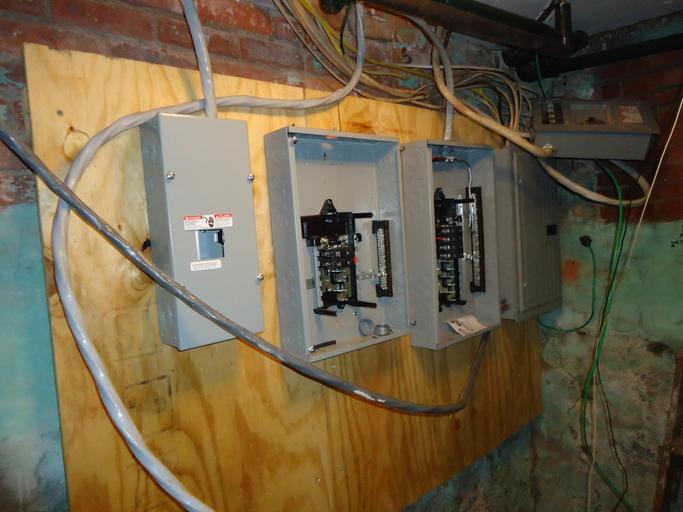
Older panels can suffer from corroded bus bars, weak breaker slots, insufficient grounding, and outdated breaker types. Upgrading the panel improves overall system stability, allows for modern protective devices, and provides capacity for additional circuits. 9. WHEN TO REPLACE A BREAKER Although breakers are durable, they do wear with time and stress. Replacement is recommended when they display repeated nuisance tripping after load issues are resolved, fail to reset reliably, feel unusually loose, show signs of heat damage, or are not approved for the panel. All breaker replacement must be performed by a licensed electrician.
SECTION 9 — WHEN TO REPLACE A BREAKER
Although breakers are durable, they do wear with time and stress. Replacement is recommended when they display repeated nuisance tripping after load issues are resolved, fail to reset reliably, feel unusually loose, show signs of heat damage, or are not approved for the panel. All breaker replacement must be performed by a licensed electrician.
SECTION 10 — LONG-TERM ELECTRICAL SYSTEM PLANNING
Recurring breaker trips are often a symptom of an electrical system that has not kept pace with modern demand. Long-term planning includes evaluating aging or undersized circuits, adding circuits for new load centers, improving lighting and receptacle wiring, upgrading to appropriately sized service panels, installing whole-home surge protection, and scheduling periodic electrical inspections.
SECTION 11 — COMPREHENSIVE BREAKER TRIPPING FAQ
This FAQ section addresses common homeowner questions about breaker tripping, patterns, causes, and appropriate responses.
Q1: Why does my breaker trip randomly with no clear pattern?
Random tripping usually indicates a loose connection, deteriorating wiring, or an intermittent arc fault. These conditions often exist inside walls or junction boxes and require a licensed electrician to diagnose safely.
Q2: Why does the breaker trip immediately when I turn it on?
Immediate trips almost always signal a short circuit or severe ground fault. Instant tripping is not caused by simple overload and warrants professional evaluation.
Q3: Can a breaker go bad?
Yes, breakers can weaken over time, especially after repeated overloads or exposure to heat, but most trips are caused by real electrical conditions rather than a defective breaker.
Q4: What is the difference between a breaker and a fuse?
A fuse melts internally when overloaded and must be replaced, while a breaker mechanically disconnects and can be reset. Both serve as overcurrent protection devices.
Q5: How do I know if I’m overloading a circuit?
If the breaker trips after several minutes of running multiple devices—especially heaters, microwaves, vacuums, or hair dryers—overload is the most likely cause.
Q6: Can I use a space heater in any room?
Space heaters should only be used on circuits with minimal additional load. They are a leading cause of overload-related trips and should never share a circuit with other high-demand appliances.
Q7: Why does my microwave trip the breaker?
Microwaves draw significant current and can overload shared circuits, especially when paired with other kitchen appliances. A dedicated circuit is often recommended.
Q8: Can I increase breaker size to stop trips?
No. Breaker size must match the wire gauge. Increasing breaker size without upgrading wiring creates severe fire risk.
Q9: Why does my refrigerator occasionally trip the breaker?
Aging compressors, weak start components, or internal electrical faults can cause intermittent trips. Refrigerators typically perform best on dedicated circuits.
Q10: Why does the vacuum cause tripping?
Vacuum motors produce strong startup surges. If the circuit is already moderately loaded, adding a vacuum can push current above safe limits.
Q11: Why does the dryer trip its breaker?
Trips may come from failing heating elements, worn motors, loose terminal connections, or a breaker that is undersized for the installed dryer. This should be inspected by a professional.
Q12: Why do my exterior outlets trip after storms?
Water infiltration into exterior outlet boxes or fixtures can lead to ground faults detected by GFCI outlets or breakers.
Q13: Why does the bathroom outlet trip when I use a hair dryer?
This may be due to a combination of high load from the dryer and moisture contributing to a marginal ground fault. The GFCI is reacting to an unsafe condition.
Q14: Why do basement outlets trip more in summer?
Higher humidity levels increase condensation on cold surfaces and can affect metal boxes, wiring, and devices, leading to increased ground-fault and arc-fault events.
Q15: Why does my AFCI breaker keep tripping with no visible issue?
AFCI devices detect arc patterns that may be hidden behind walls or in cords. Repeated AFCI tripping generally indicates real wiring or connection issues, not false alarms.
Q16: Why does the panel buzz or crackle before a breaker trips?
Buzzing or crackling often indicates arcing at loose connections or damaged components. This is a serious hazard requiring immediate professional attention.
Q17: Why does my breaker feel hot?
Excessive breaker heat may result from overload, loose panel connections, or internal breaker wear. A hot breaker is a warning sign.
Q18: Why do lights flicker when large appliances start?
Some flicker is normal due to voltage drop during motor startup, but significant or persistent flickering may indicate undersized circuits, loose connections, or panel issues.
Q19: Can aluminum wiring cause breaker trips?
Yes. Aluminum wiring expands and contracts more than copper, which can loosen connections over time and contribute to arcing and breaker tripping.
Q20: Why does one room lose power but the breaker looks fine?
A tripped GFCI upstream, an open neutral, or a failed splice can interrupt power without the dedicated breaker appearing tripped. A professional should trace the circuit.
Q21: Why does the breaker trip only at night?
Nighttime trips could be associated with specific loads cycling on, exterior moisture, or cooling temperatures affecting wiring and connections.
Q22: Why does the breaker trip when I add new smart devices?
Smart devices often contain switching power supplies that may stress marginal wiring or reveal existing weaknesses in circuits or connections.
Q23: Why does the breaker trip after running for a while, not immediately?
Delayed tripping usually indicates a thermal overload as heat builds up in wiring and breaker mechanisms, rather than a sudden short circuit.
Q24: Why do trips seem to happen more during extreme temperatures?
Extreme heat or cold affects insulation, connections, and load behavior, making marginal circuits more likely to fail or overload.
Q25: Should I be worried if the same breaker trips multiple times in a week?
Yes. Repeated trips indicate a recurring condition that should be diagnosed and corrected by a licensed electrician, not ignored or bypassed.
SECTION 12 — FINAL RECOMMENDATIONS & SAFETY GUIDANCE
Breaker tripping is not an inconvenience—it is a safety communication from your electrical system. Breakers are designed to respond to overloads, faults, and abnormal conditions before they cause fires or damage. When a breaker trips more than once, especially without an obvious overload, there is an underlying issue that must be identified and corrected.
Homeowners should limit their involvement to safe, non-invasive checks: proper breaker resets, unplugging devices, observing patterns, and inspecting visible cords and outlets. All panel work, wiring repairs, breaker replacement, and fault diagnostics must be handled by licensed electricians. Upgrading circuits, modernizing panels, resolving moisture issues, and improving wiring integrity all contribute to a safer, more resilient electrical system.
Persistent or unexplained breaker trips should never be ignored, bypassed, or ‘fixed’ by installing a larger breaker. Addressing the root causes protects the home, its occupants, and the long-term reliability of the electrical system.
SAFETY POP-OUT: CRITICAL ELECTRICAL WARNINGS
Clear signs you need an electrician
What to tell the electrician when you call:
This information helps the electrician choose the right diagnostic approach and arrive prepared with the correct materials and test equipment.